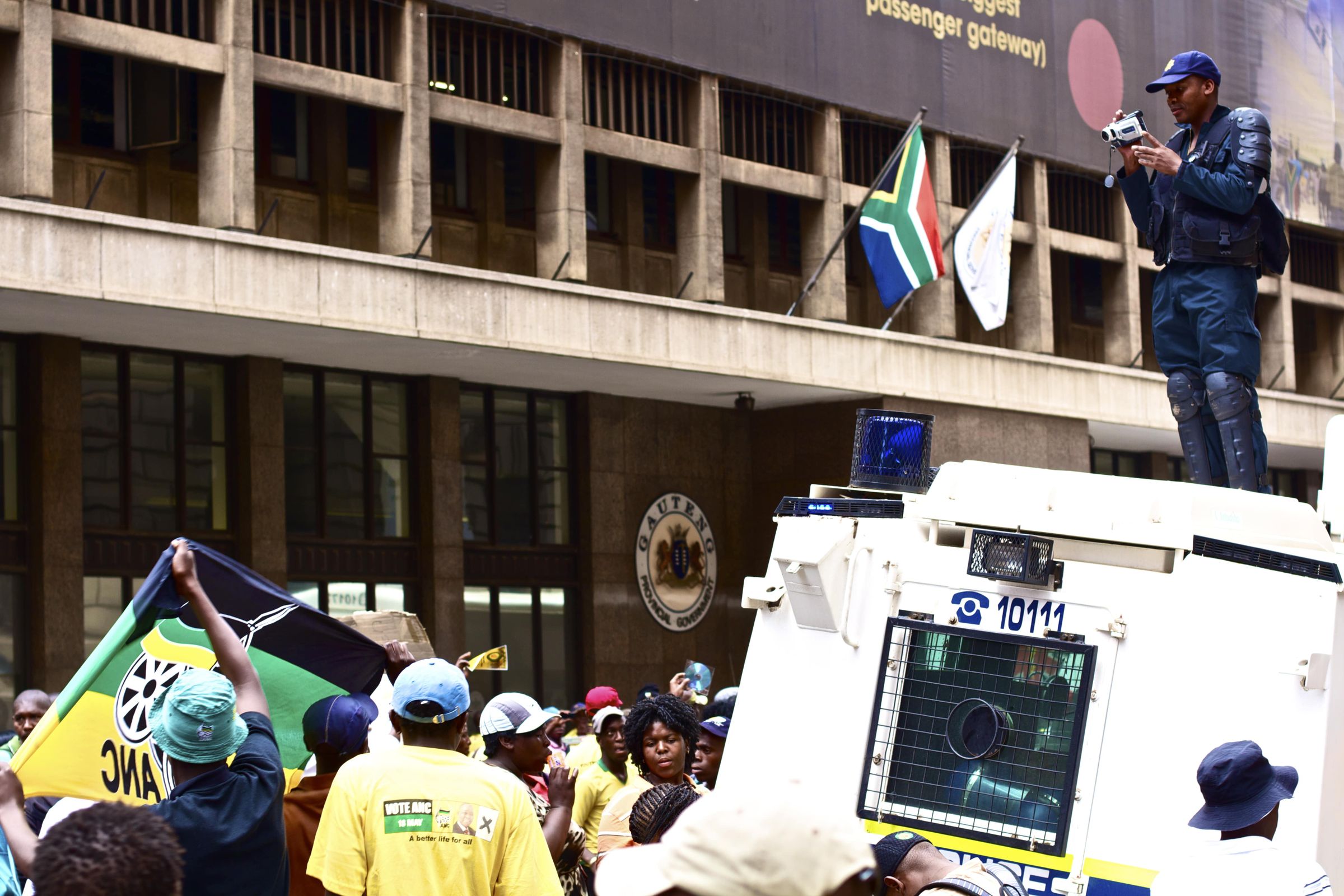
Gauteng metro services hang on new ANC coalition pact
Coalition deal decides who delivers water, waste and housing to Gauteng metros
For the millions of people who live in Gauteng’s three largest metros, the fight over coalition bargaining has never been abstract party arithmetic. It decides who runs waste collection, water, housing and transport, and whether the municipalities delivering those services stay financially sound. This week those services became the currency of a broad new political pact, one that leaves the Democratic Alliance on the outside looking in.
The African National Congress has assembled a wide-ranging alliance of predominantly black parties to govern Gauteng’s metropolitan municipalities, an arrangement described in negotiating circles as Operation KZO, or Keep Zille Out. The pact shuts the DA out of Johannesburg, Tshwane and Ekurhuleni, despite the party finishing as the largest single party in all three metros.
ActionSA leader Herman Mashaba confirmed to the Mail & Guardian on Thursday that negotiations with the ANC and other parties had effectively concluded. Only the allocation of positions and the finalisation of governing arrangements remain outstanding. A high-level meeting at the Emoyeni Conference Centre in Parktown on Thursday morning drew representatives of more than 10 political organisations, including the ANC, MK Party, EFF, ActionSA, Build One South Africa, Rise Mzansi, the South African Communist Party, Inkatha Freedom Party, African Transformation Movement and the Patriotic Alliance.
Under the agreement, Mashaba is set to become mayor of Johannesburg, while ActionSA’s Nasiphi Moya retains the mayoral chain in Tshwane. The ANC will nominate a mayor for Ekurhuleni. “We want to replicate in Joburg what Nasiphi did in Tshwane and double her efforts there,” Mashaba said.
The numbers underpin the arrangement. The combined strength of the ANC, ActionSA, EFF and MK Party delivers a majority in each metro. In Johannesburg the four parties hold 138 of 270 council seats, two more than the 136 required. In Ekurhuleni they command 128 of 224 seats, comfortably above the 113 needed, and in Tshwane their 109 seats give them one more than the 108 required. The DA, by contrast, secured 34.79% of the vote in Johannesburg, 34.37% in Tshwane and 30.68% in Ekurhuleni, but no outright majority anywhere.
Meanwhile, the parties have concluded negotiations on a coalition covering 10 of Gauteng’s 11 municipalities. A task team coordinated by Gauteng premier Panyaza Lesufi, who chaired the Emoyeni meeting, will oversee the allocation of positions and determine the coalition’s political leadership. Mayoral committee portfolios and other posts will be distributed according to each party’s representation in the respective councils.
For citizens, the terms of cooperation will matter as much as the arithmetic. ActionSA has insisted that its participation must be anchored in service delivery, financial stabilisation and infrastructure renewal. At multilateral discussions in Sandton on Wednesday, EFF secretary-general Marshall Dlamini said the parties were negotiating as equals, having set aside ideological differences in the interests of residents, and that there would be no big brother in the arrangement.
The DA has warned that its exclusion, despite its electoral showing, would undermine the outcome voters delivered. Leader-in-waiting Geordin Hill-Lewis has called the effort to exclude the party a profound error, saying voters would ultimately hold political parties accountable. The stakes extend beyond the province: the arrangement could complicate the DA’s continued participation in the government of national unity, with the ANC’s national executive committee reportedly reflecting growing discomfort about the partnership and figures including the ANC Youth League and Lesufi calling for DA ministers to be removed from cabinet.
Mashaba said negotiations with the DA stalled after the party declined to meet his condition that Helen Zille and Tshwane mayor Cilliers Brink be removed from the equation. “They wasted a week and a half, and the train has moved,” he said, adding that the coalition agreement being drafted centres on tackling corruption, improving service delivery and public service. He also contrasted his R180 000-a-month campaign spend in Gauteng with Zille’s R2 million budget, noting that ActionSA had made inroads in traditional ANC strongholds including Soweto, Tembisa and Atteridgeville. “They had the money but we dominated the space. The voters invested in us because our message resonated with them,” he said.
The parties say the deal will be signed within days. Whether it delivers for the residents who must live under it will be the truest test.
Q&A
What practical services do the Gauteng coalition negotiations affect?
Who runs waste collection, water, housing and transport in Johannesburg, Tshwane and Ekurhuleni, and whether those municipalities stay financially sound.
What commitments have the coalition parties made that bear on residents?
ActionSA has anchored its participation in service delivery, financial stabilisation and infrastructure renewal, and the draft coalition agreement centres on tackling corruption and improving service delivery and public service.
Do the coalition parties command a majority in each metro?
Yes. The ANC, ActionSA, EFF and MK Party hold 138 of 270 seats in Johannesburg, 128 of 224 in Ekurhuleni and 109 of 113-plus required seats in Tshwane (109 of the 217-seat arithmetic, one above the 108 needed).
How has the DA responded to being shut out?
Its leader-in-waiting Geordin Hill-Lewis has called the exclusion a profound error, saying voters would ultimately hold political parties accountable for undermining the outcome they delivered.