Russia-Africa Summit: What Moscow's Promises Mean for Daily Life
For African citizens, the summit's promises face a hard test in food prices, safety and jobs
At the Third Russia-Africa Summit, Moscow Talked Big. But Who Was Listening?
For ordinary Africans, the question hanging over this week’s Russia-Africa Summit was never one of diplomatic pageantry. It was a question of daily consequences: whether deeper ties with Moscow make their lives safer, their food more affordable and their futures more secure.
The two-day gathering, held in its third iteration, brought delegations from 48 countries, including 22 heads of state, to meet with Russian officials, among them President Vladimir Putin. Since its launch in 2019, the summit has followed a familiar script. Moscow casts itself as an anti-imperialist bulwark, drawing on historic ties to African independence movements, while African leaders seek trade deals and prestige. Each side walks away with something: Russia demonstrates it does not need the West to have allies, and participating governments can claim the favor of a global power.
But nearly five years into the full-scale invasion of Ukraine, the war’s effects are being felt far from the battlefield, and they touch African citizens directly. Nowhere is this clearer than in military recruitment. African countries have been among the biggest targets of Moscow’s efforts to fill manpower gaps in Ukraine by enlisting foreign citizens, a practice that rights advocates say meets the criteria of human trafficking. In countries like Kenya and South Africa, the issue has become a matter of national outrage, drawing the attention of government investigators.
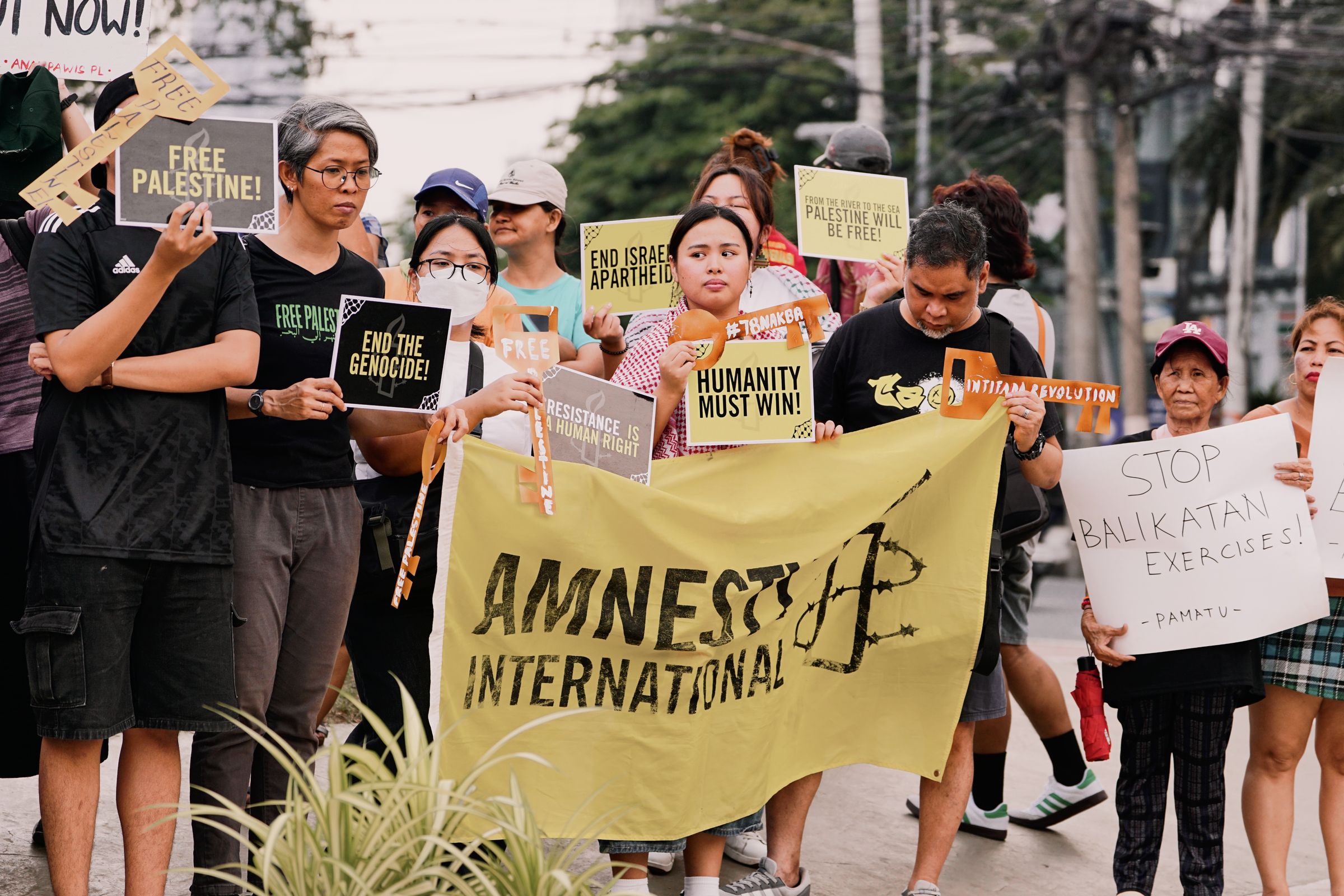
This week, the human rights watchdog Amnesty International called on African officials to raise the matter with their Russian counterparts, saying it would be “a profound disservice to the people of their countries” to “remain silent.” The message was aimed squarely at the duty of African leaders to protect their own citizens.
Food security is another front on which the war reaches African households. Fighting on land and sea continues to sporadically disrupt supply lines to longstanding buyers of Ukrainian agricultural products, including Kenya, Libya and Tunisia, driving up food costs as importers pivot to other providers. These pressures were present in nascent form at the last summit in 2023. Three years on, the picture of how the war reverberates across the continent is much clearer, and it does not look reassuring for Moscow.
Meanwhile, the security footprint extends to Russia’s mercenary network as well. Rebranded as the Africa Corps and placed under Defense Ministry control after the Wagner Group’s dissolution in 2023, the organization is still trailed by stories of human rights abuses in countries like Mali. All of this complicates the image the summit projects of two regions “united by truly strong bonds of friendship and close partnership,” as Putin put it on the second day.
In reality, analysts say, those words apply to a limited number of countries. Many attending nations depend on Russian military or diplomatic support in one way or another, noted Joseph Siegle, a senior research associate at the University of Maryland’s Center for International and Security Studies and an expert on African security issues. “These are the majority of the 22 heads of state that are there,” he told The Moscow Times. “Their rationale for being there is political rather than anything else. There’s a mutual interest in supporting that perception of Russia’s broader ambitions with Africa.”
The spectacle, he added, should not be mistaken for widespread approval of Moscow’s conduct. Many African countries are at worst skeptical and at best modestly enthusiastic about Russia’s ability to be a transformative partner, and some fear the reputational cost of engagement. The participation numbers tell part of that story: the summit’s strongest showing came in 2019, when 43 heads of state attended. Both editions since, held during the war, have seen attendance shrink by nearly half.
The economic record matters just as much for citizens who were promised development. Russia is not among Africa’s top 10 trading partners. The trade that does occur is lopsided, with Moscow exporting about seven times more than it imports, and Russia provides only about 1% of total foreign direct investment into the continent. “From the African perspective, the primary interest for most external partners is what they can do to help with Africa’s economic prospects, and there’s a realization that Russia offers relatively little there,” Siegle said.
Still, some governments came away with tangible agreements. In the summit’s highest-profile deal, Ethiopia, a country teetering on the brink of civil war, received 12 Russian Su-35 fighter jets, though officials did not disclose the value. Putin said Russian firms are interested in opening production plants in African countries to circumvent Western sanctions, and officials from Rosatom, the state nuclear agency, announced talks with multiple countries to build power plants, including some that could float in coastal waters. “We invite Russian companies to invest in Mozambique and establish reliable partnerships,” Mozambique President Daniel Chapo was quoted as saying by the state-run TASS news agency.
Russian officials appear to have “refined their pitch to their African counterparts,” at least in rhetoric, said Ivan Klyszcz, a research fellow at Estonia’s International Center for Defense and Security. “The themes gesture more consistently at topics that are important for African development, which has always been a big kind of flaw in Russia’s offer to Africa,” he said. “What it can offer cannot match what African governments seek.”
The open question, then, is whether Moscow can deliver on its economic promises, especially while preoccupied by the war. After two summits promising substantial expansion, trade still falls short of targets, and ties with many African nations remain based primarily on security assistance. “They’re less focused on these big political issues and more on concrete development,” Klyszcz said. For the people those governments represent, that is precisely the measure on which the relationship will be judged.
Q&A
How many countries and heads of state attended the third Russia-Africa Summit?
Delegations from 48 countries attended, including 22 heads of state, down from 43 heads of state at the 2019 summit.
Why is military recruitment a concern for African citizens?
African countries are among the biggest targets of Moscow's efforts to fill manpower gaps in Ukraine by enlisting foreign citizens, a practice rights advocates say meets the criteria of human trafficking. It has become a matter of national outrage in Kenya and South Africa.
How does the war in Ukraine affect food costs in Africa?
Fighting on land and sea sporadically disrupts supply lines to longstanding buyers of Ukrainian agricultural products, including Kenya, Libya and Tunisia, driving up food costs as importers pivot to other providers.
What concrete agreements came out of the summit?
Ethiopia received 12 Russian Su-35 fighter jets, Putin said Russian firms are interested in opening production plants in African countries, and Rosatom announced talks with multiple countries to build power plants, including some that could float in coastal waters.