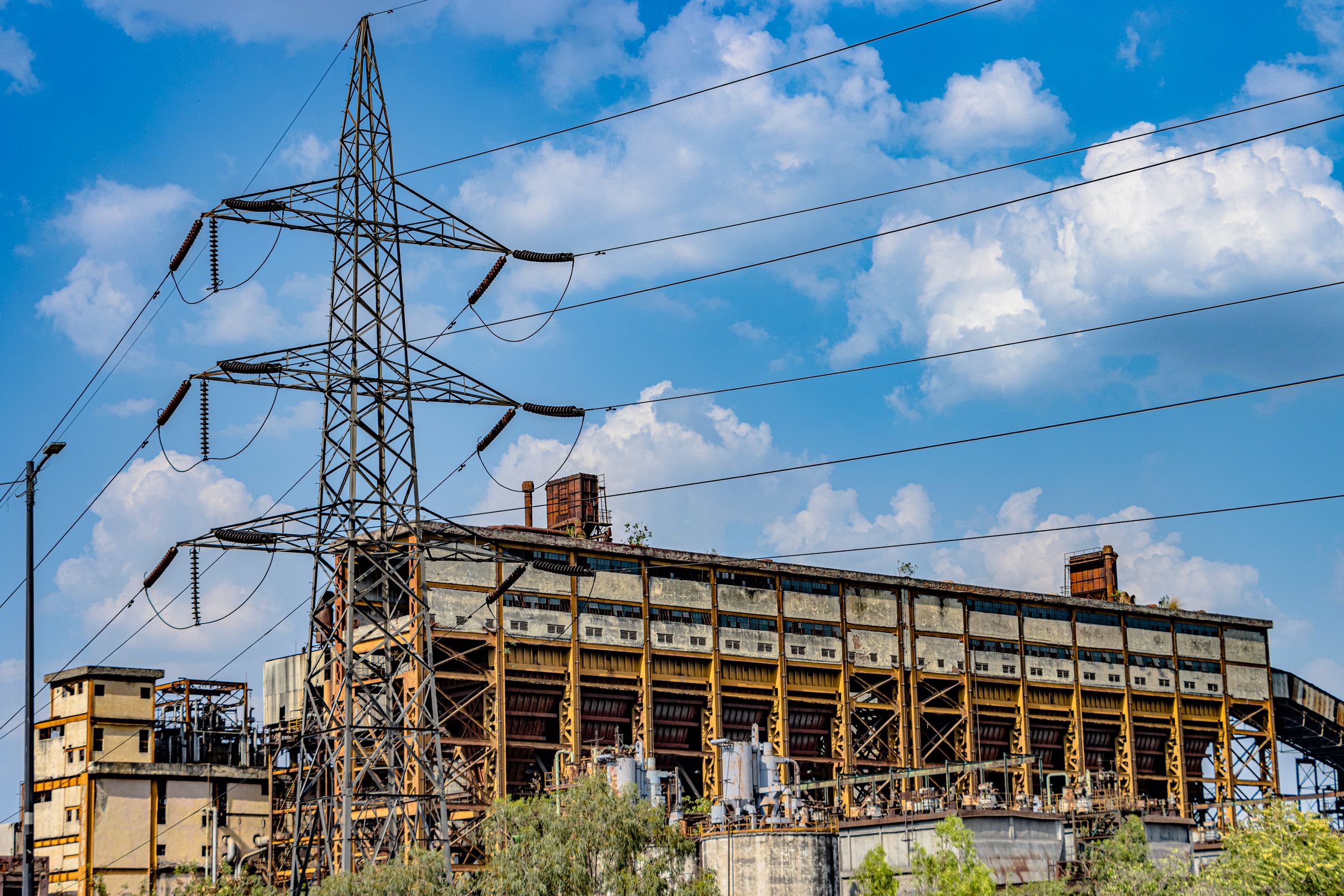
South Africa's R1-Trillion Build Plan Meets Thin Delivery
Announcements abound, but state capacity stalls projects on the ground
South Africa’s R1-trillion infrastructure programme looks ambitious on paper. On the ground, the delivery record is far thinner, and last Wednesday’s medium-term budget policy statement did little to close the gap between promise and construction.
Finance minister Enoch Godongwana presented the statement days ago, lowering the growth forecast for the year while pointing to continued reform implementation and infrastructure investment as the pathways to growth. The candour deserves credit. The delivery record, though, raises harder questions about whether the machinery exists to execute the plans being announced.
For years, President Cyril Ramaphosa has promised to turn the country into a major construction site under the government’s programme. The numbers are big. The progress is not. The country is not a construction site, and the reasons lie less in the absence of projects than in the state’s capacity to deliver them.
There is no shortage of work. Public infrastructure such as roads, bridges and water systems is collapsing because of a lack of maintenance, while a rapidly growing population requires new social and economic infrastructure to support growth. Daily public service delivery protests across the country testify to the backlog and neglect. Potholes get fixed but cannot stand the next rains. New bridges are soon washed away.
Execution, not ambition, is the bottleneck. Mega state-led projects are notorious for cost and schedule overruns, and Eskom and Transnet stand as textbook examples of how not to run major infrastructure programmes. Transnet’s multipurpose pipeline ran over budget and took years to complete. Kusile and Medupi, Eskom’s power stations, repeat the same pattern.
Meanwhile, the private sector has partly filled the space the state left. Current infrastructure investment is largely driven by private players, with the public sector playing a limited role. Even that private money goes less to productive infrastructure and more to retail, commercial and residential developments. The constraint is structural: private firms can only invest in private projects, while the state holds a monopoly on bulk infrastructure such as water, electricity and sanitation.
Mike Nkuna, the property magnate and a significant shareholder in Kaizer Chiefs Football Club, often complains about how hard it is to undertake major commercial projects because of the state’s tardiness in laying out that bulk infrastructure. His frustration helps explain the rise of private sector-led infrastructure development across the country.
By contrast, the reforms that are being delivered have not yet produced results. As Business Leadership South Africa, the big business lobby group, showed in yesterday’s presentation, considerable progress is being made in implementing the economic reforms intended to free up the economy. Those reforms, evident in ending load-shedding, restructuring Eskom and stabilising the freight logistics system, have yet to translate into higher growth and new jobs. That is understandable, given that all reforms take time to be felt.
Godongwana’s response to the delivery problem was a raft of measures to accelerate implementation of the infrastructure programme. Most of what he proposed are new institutions. These are noble proposals, but they will take years to set up and to have an impact, which sits uneasily with the urgency of the backlog.
The capacity problem is not in dispute. The South African state is sorely lacking in this regard, a reality Ramaphosa recognises and so does the private sector. The government, unfortunately, is led by statistics. In these pages, Sean Phillips, director-general at water affairs, wrote eloquently about the disabling public procurement system, a diagnosis that goes to the heart of why projects stall long before shovels hit the ground.
Infrastructure development, fixing old assets and building new ones, is a known engine for catalysing economies in jobs and growth. That benefit can only be realised where the undertaking is feasible. As the editorial published at https://www.businessday.co.za/opinion/editorials/2026-10-29-editorial-turning-south-africa-into-a-construction-site/ argues, the test now is whether the state can move from announcements to execution.
The practical path forward is straightforward. Godongwana should read the Phillips opinion piece and accept the private sector’s helping hand to turn South Africa into a construction site. Without that, the R1-trillion programme risks remaining what it has been for years: big numbers, little progress.
Q&A
What is the main bottleneck in South Africa's R1-trillion infrastructure programme?
Execution capacity, not a shortage of projects. Public infrastructure such as roads, bridges and water systems is collapsing from lack of maintenance, and a disabling public procurement system stalls projects long before shovels hit the ground.
Which projects are cited as examples of failed state-led delivery?
Transnet's multipurpose pipeline ran over budget and took years to complete, while Eskom's Kusile and Medupi power stations repeat the same pattern of cost and schedule overruns.
How has the private sector filled the delivery gap, and what limits it?
Private players drive most current investment, but it goes mainly to retail, commercial and residential developments rather than productive infrastructure, because the state holds a monopoly on bulk infrastructure such as water, electricity and sanitation.
What did Finance Minister Enoch Godongwana propose in the medium-term budget policy statement?
A raft of measures to accelerate implementation, mostly new institutions. These are seen as noble but will take years to set up and have an impact, which sits uneasily with the urgency of the backlog.