For African leaders, Moscow summit was about grain and power
African leaders weigh grain, energy, and security offers at the Moscow summit.
For the leaders who gathered in Moscow last week, the third Russia-Africa summit was less about grand geopolitical statements and more about practical questions: who will sell them grain, who will ship fertilizer, and who will help them keep the lights on. Forty-eight African countries sent delegates, and 22 sent heads of state, a notable rebound from the 17 leaders who showed up in St. Petersburg in 2023, when Russia’s invasion of Ukraine was still fresh in the minds of governments across the Global South. The number still fell short of the 43 heads of state at the first summit in 2019, but the trajectory suggests African governments remain willing to listen to Moscow despite the strains of the war.
Russian President Vladimir Putin hosted the two days of high-level talks, held October 28 and 29, which focused primarily on continued security relations and opportunities for deeper economic collaboration. For Putin, the pitch to his guests included a promise that Russia would refrain from what he called “neo-colonial exploitation,” a phrase likely to resonate with audiences on the continent. But for many African leaders, attendance reflects something more pragmatic than sentiment: in an increasingly fractured world, they are looking for any partner willing to offer strong terms, Russia included.
The relationship, however, carries a complicated record for the communities living with it. Russia’s paramilitary Africa Corps has roughly 2,500 fighters on the continent, contracted by a number of African governments to fight armed groups in exchange for payment, including through access to commodities. The group has committed human rights abuses and has largely failed to stop the spread of armed group violence, and that record has caused a souring of Russian goodwill in parts of Africa.
Economic ties, meanwhile, are growing but remain well short of Moscow’s ambitions. Trade between Russia and Africa stood at an estimated $27 billion in 2025, up sharply from $16.8 billion in 2019 but far below the $40 billion target Putin set at the first summit. This time, Russian officials set a new goal of $50 billion in the “near future,” claiming Russian companies are keen to expand trade in grain and fertilizer. The numbers behind that claim are concrete: Russia exported more than 18 million tons of grain to Africa last year, and fertilizer shipments have risen from 1.5 million tons last year to 2.2 million tons so far this year.
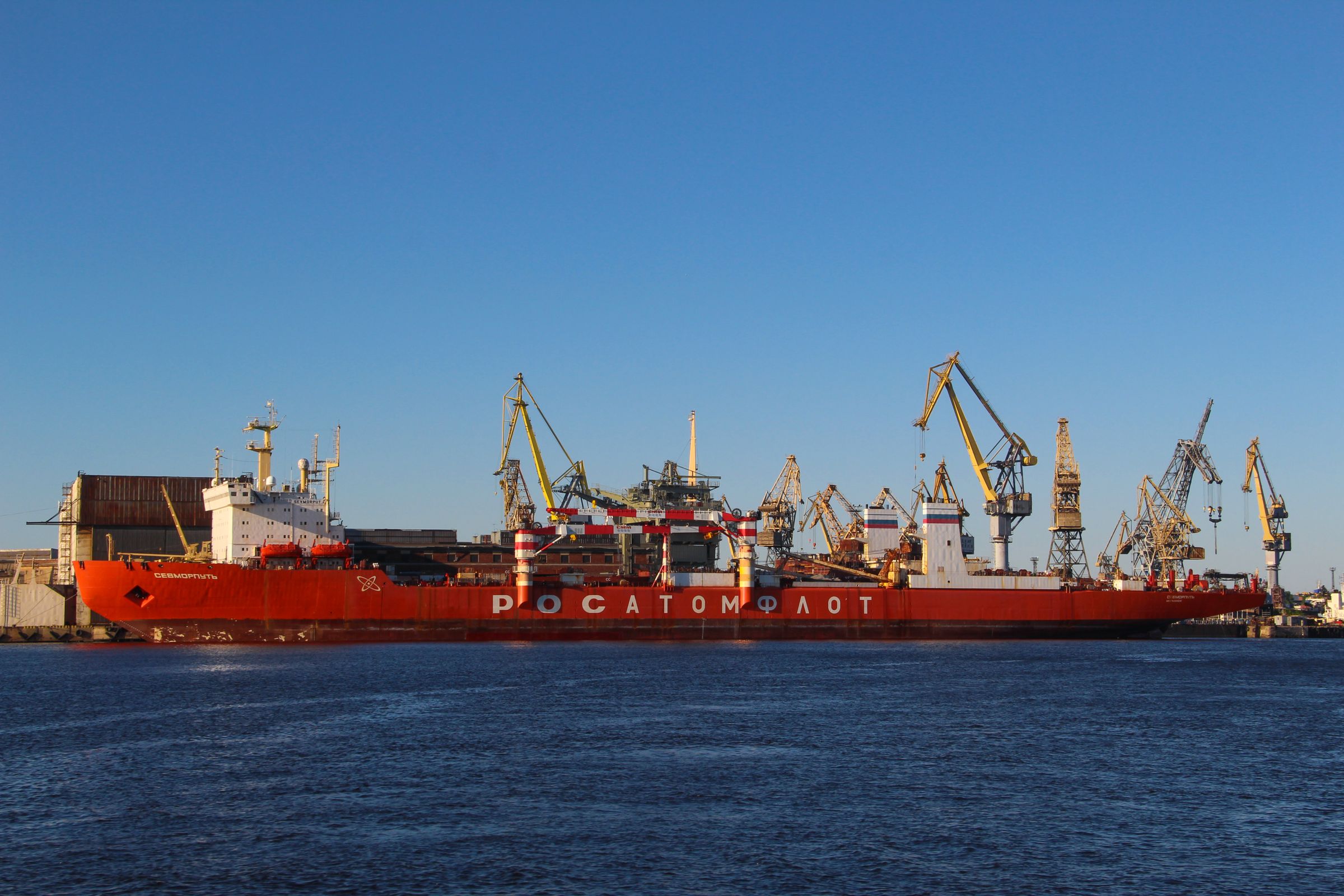
Energy is another front, and one that reaches ordinary households directly. Russia announced agreements with at least six African countries on nuclear energy at the summit, and the state energy company Rosatom is in advanced talks with Egypt, Togo, Namibia, and Tanzania to build floating nuclear power plants off their coasts. For African consumers seeking to diversify their energy mix, the momentum is real, and it is advancing quickly.
The most instructive case, though, may be Ethiopia, where fighting in the northern states and rising tensions with neighboring Eritrea have put civilians on edge. Just as the summit was kicking off, news emerged that Russia had expedited the sale of 12 fighter jets to Ethiopia. Russia also agreed to send four defense batteries at a later date. Yet alongside the hardware, there may be an opening for diplomacy. Eritrean President Isaias Afwerki, who attended the summit, said in a Russian television interview that he was willing to let Russia negotiate solutions to the crisis between the two countries. Ethiopia’s Abiy Ahmed, also in Moscow, has previously expressed interest in having the Russians join other countries as mediators, and Russian officials have confirmed they would be interested in brokering a peace agreement.
For the United States, this is where a calibrated response matters. An end to tensions in the Horn would serve American interests, given the substantial economic investments and geopolitical stakes the United States has in the region, so Washington ought to welcome the prospect of Russia successfully lowering them. More broadly, American policymakers often treat Russia as a necessarily nefarious actor in the Global South, bent on usurping U.S. interests wherever it goes. But Russia, like any country, has economic and security objectives of its own, many independent of its rivalry with the West. Where Moscow can act as a productive partner, whether mediating thorny conflicts or supplying grain and goods that improve food security, American interests could actually be advanced.
There are real limits, and African governments see them clearly. The chaos of the Ukraine war has shadowed Russian engagement, and its effects land hardest on African families buying food. Moscow joined the short-lived Black Sea Grain Initiative from 2022 through the summer of 2023, which guaranteed shipping corridors from Ukraine’s Black Sea coastline, partly out of fear of being seen as an obstacle to global food security. That caution has since given way to escalation, with both Moscow and Kyiv taking ever-greater risks to degrade each other’s infrastructure. Russia’s recent decision to impose a de facto blockade on all shipping from Odessa, Ukraine’s logistically vital port city, is pushing food prices upward for African and other Global South countries already reeling from energy deficits and market instability tied to the Iran crisis. Moscow has tried to blunt the damage with free grain shipments and targeted export deals with customers such as Egypt, but such makeshift measures cannot reverse the war’s macroeconomic harm. Sustained relief would require another grain deal, a partial ceasefire covering Black Sea shipping, or an end to the war, none of which appear likely soon.
The war has also created friction closer to home for African leaders and their citizens. Several governments, alarmed by reports alleging the forcible recruitment of Africans into Russia’s armed forces, have pressed Moscow directly. Putin assured his Ghanaian counterpart, John Mahama, last week that all recruitment of Ghanaian citizens into Russia’s military would be banned, and an identical agreement was reached with Kenya.
Herein lies the paradox that defines Russia-Africa ties. The Ukraine war has given Moscow powerful incentives to strengthen engagement with African and other non-Western states, yet the instability that same war generates imposes constraints that can be managed but never fully lifted while the fighting continues. Russia’s interest is not merely performative; it aims to entrench Moscow as a regional player able to advance political and security outcomes at odds with some Western objectives, using the few venues for projecting power it has across the continent. But the cost-benefit logic African states apply to bilateral cooperation will ultimately decide how far those overtures go.
American policymakers should keep those constraints in mind before overreacting to Russia’s next maneuvers in Africa.
Q&A
How many African countries and heads of state attended the Moscow summit?
Forty-eight African countries sent delegates and 22 sent heads of state, up from 17 leaders at the 2023 St. Petersburg summit but below the 43 heads of state at the first summit in 2019.
What did Russia offer African countries on energy?
Russia announced agreements with at least six African countries on nuclear energy, and Rosatom is in advanced talks with Egypt, Togo, Namibia, and Tanzania to build floating nuclear power plants off their coasts.
How does the Ukraine war affect African consumers?
Russia's de facto blockade on shipping from Odessa is pushing food prices upward for African and other Global South countries already reeling from energy deficits and market instability tied to the Iran crisis. Moscow has offered free grain shipments and targeted export deals, but sustained relief would require another grain deal, a partial ceasefire covering Black Sea shipping, or an end to the war.
What did African governments press Moscow about regarding recruitment?
Several governments, alarmed by reports alleging the forcible recruitment of Africans into Russia's armed forces, pressed Moscow directly. Putin assured Ghanaian President John Mahama that all recruitment of Ghanaian citizens into Russia's military would be banned, and an identical agreement was reached with Kenya.